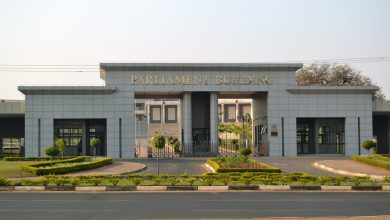
Minister of Energy and Mining Jean Mathanga says most Independent Power Producers (IPPs) have not yet rolled out their ventures due to concerns on issues relating to proceeds repatriation, among others, at a time the country is facing foreign exchange scarcity.
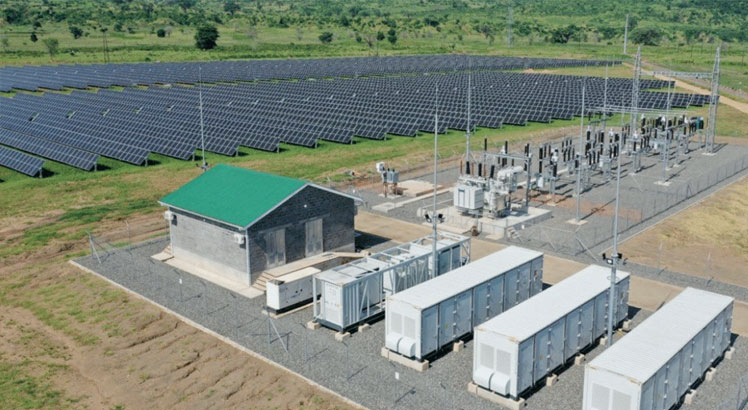
The minister said this on the sidelines of her visit to JCM Power Solar Plant in Salima District on Wednesday, saying the ministry has since started engaging IPPs to give necessary attention to their concerns.
She said most licensed IPPs are foreign investors who would prefer to either be paid tariffs in foreign currency or having assurance of converting their proceeds into foreign currency at some point.
Said Mathanga: “Several IPPs have not rolled out and there are several challenges stemming from issues to do with how can they externalise the proceeds of their operations and, as a ministry, we are giving attention to those issues.
“If those issues are to do with us, we are there to solve them because we need more players into the sector, but if they are issues to do with themselves that they are not ready then they should explain the reasons and we will take necessary action.”
Mathanga’s visit to JCM Power, which rolled out in 2021 and producing 80 megawatts (MW) from solar, came at a time only four licenced IPPs have kick-started their operations out of 21, a situation she admitted is not impressive.
JCM Power chief executive officer Jon Bahen confirmed on Wednesday that they are engaging government on how best to resolve such issues that emanate from the economic challenges that the country has been facing.
He said: “It’s well known that the macroeconomic challenges that Malawi faces. As a project and a company operating in Malawi, we feel those.
“These are challenges and in life there are always challenges and what we need to do is to work with government on solutions.”
Malawi Stock Exchange-listed Press Corporation (PCL) plc is one of the licensed IPPs to produce 50MW from solar in Nkhoma in Lilongwe and is expected to roll out this year.
PCL chief executive officer Ronald Mangani is quoted as having assured that the project will be implemented within the stipulated timeline.
Meanwhile, all 11 IPPs that had initially planned to start operations by 2024 missed the deadline as authorities said apart from the four that commissioned four years ago, the rest were targeting 2026 onwards.
Ministry of Energy and Mining director of electricity Million Mafuta said in an interview that apart from the 11, other companies are also interested to produce electricity, adding the number to over 21 since government unbundled Escom in 2016.
In the meantime, four IPPs—80MW JCM Power (Salima and Golomoti in Dedza), 21MW Serengeti Plant in Nkhotakota, 8.2MW Mulanje Hydro in Mulanje and 3.06MW Mulanje Cedar—are operational.
Last year, Ministry of Energy and Mining threatened to revoke the licences of IPPs that failed to rollout their projects years after obtaining a licence, but Mathanga said they have currently not gone that far, but will not entertain investors that are not serious.
Chamber of Mines and Energy national coordinator Grain Malunga said in an interview yesterday that the delays in the implementation of IPPs is attributed to institutional capacity challenges as it takes time for relevant agencies to properly coordinate with the IPPs, especially now that there is no Power Market Limited.
He said “It is not impressive at all. Out of 21 IPPs, only four have commissioned their projects. One of the reasons can be that the dissolution of Power Market Limited put the process of IPP negotiation in disarray.
“Electricity Supply Corporation of Malawi [Escom] started reviewing the applications and the IPP also lost confidence with this institutional restructuring. Escom is never known for efficient conclusion of business.”
Former Escom chief executive officer Kandi Padambo observed that some IPPs are not forthcoming to invest because many prospective investors have complained that electricity tariffs in Malawi are not cost-reflective and too low to recover long-run marginal costs of an investment cycle.
Government through the reforms in the energy sector unbundled Escom in 2016 and allowed for the participation of IPPs to generate electricity and sell to Escom.
Currently, Malawi has a total installed capacity of 554.24MW with 390.15MW hydro power, 110MW from solar sources and 53MW thermal, according to Electricity Generation Company.